
We’re Not Selfish. The System Is.
Honjok, Solitude, and Who Gets Blamed When Economies Fail.

My Mom used to say that I was a quiet child. Before my sister was born, I would play alone and have a great old time.
I was a true introvert. According to psychiatrist and psychotherapist Carl Jung, introverts turn into their own minds to recharge energy, while extroverts need other people to replenish energy.
As an adult, a friend asked what my favorite thing about work trips was. Being alone. In Austria, in between meetings, I took a cab to the Gustav Klimt museum and then sat at a Starbucks and wrote for a while. That was my escape in every country I visited.
Loneliness is a state of mind that’s not chosen and doesn’t have a positive connotation. Being alone is a state of existence and has no negative connotation.
Do you feel lonely sitting at a café with a good book or listening to music? If you don’t, you are enjoying chosen solitude.
Do you feel lonely at a crowded party? This may be due to emotional loneliness or social isolation.
Honjok in Korean comes from the words honja (alone) and the suffix -jok (tribe) and refers to a person who does things alone: eat, spend free time, shop, travel, etc.
Ohitorisama in Japanese means more or less “party of one”.
In both Korea and Japan, drinking, eating, karaoke, and holidays are shared, so introverts are pressured to spend much of their much needed alone time in large groups.

The Peace of Introversion
The Korean honjok revolution has allowed introverts to be seen not as lonely but as cozy, happy, and at peace.
The Japanese Ohitorisama sector of society has been studied and it’s been found that 50% of people who attend concerts do so by themselves and connect with new people there through their shared interest.
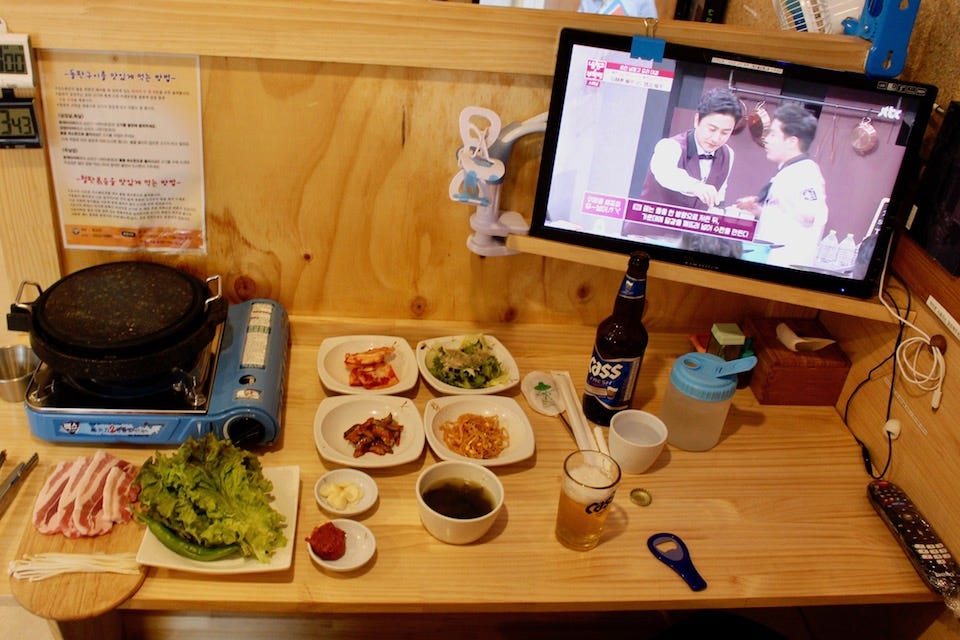
Have you ever been alone, enjoying a moment, only to be approached by people and suddenly feel irritated at the intrusion? Yep, I hear you.
The stigma of preferring to do things alone, however, persists in most of the world, despite the fact that honjok is becoming increasingly common and the world becomes louder and louder.
But something is changing. Something that is affecting society in general and birthrates specifically.
The conversation usually stops at personality.
But solitude isn’t the real issue.
What comes next looks at the economic systems that quietly punish people for opting out, then shame them for the consequences.
This part of the essay is for paid subscribers.
If this resonates and you want to go deeper, I’d love to have you there.
