
The Cost of Staying Quiet When You’re Furious.
Quiet Rage: Why Some Cultures Don’t Yell

“You have your father’s temper. Nobody can say anything to you without you lighting up like a match. Forget I said anything!”
I’ve heard those words several times in my life. They’re right, by the way. All my Korean family had a bad temper…maybe not my great-grandma…although she used to mumble in Korean a lot so, she could have been swearing at us.
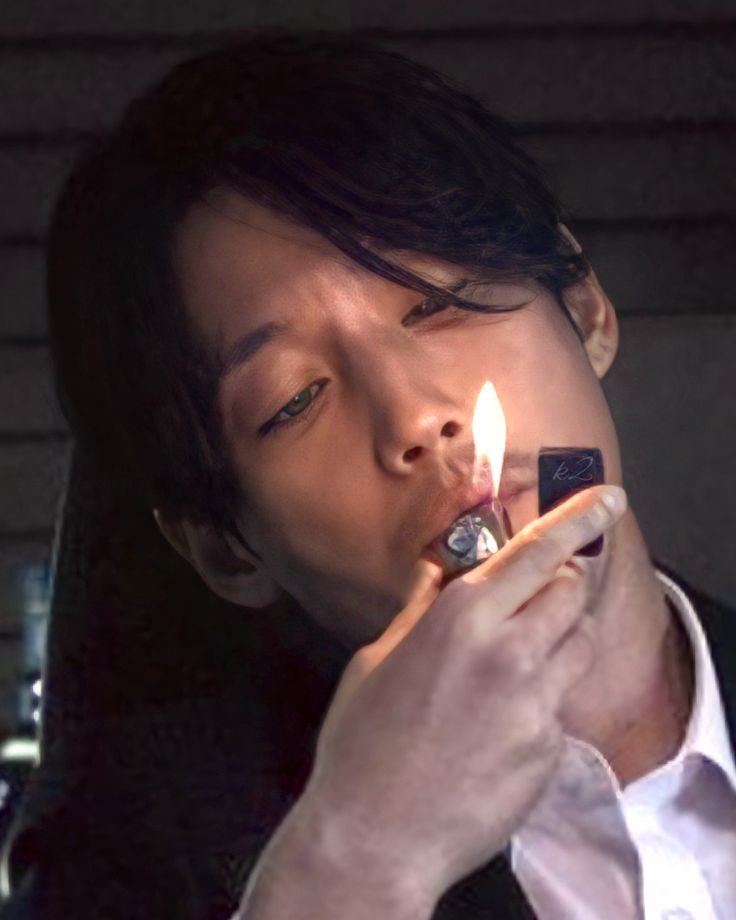
My boss is seething and I’m nearby so I get scolded for something someone else did. I walk out of his office like a hand grenade with a pin that could come out at any moment.
But I’m Korean. We hold things in because shouting would be humiliating.
I have traveled with my boss and his family to Olympic events for years. We have a good relationship. But the day after the scolding, I’m quiet and resentful. He makes a joke and I don’t laugh.
I’m being passive aggressive AF. I don’t care.

Why do Koreans have a silent temper?
Some of us weren’t raised to explode. We were raised to endure. And endurance ferments into anger.
The Confucian importance of group harmony in East Asia is because if someone flies off the handle in a group, it upsets relationships and creates conflict.

Solution? Suppress anger.
Result? Passive-aggression, resentment, frustration, and health problems related to holding onto anger.
Mapping Suppressed Anger

When anger doesn’t disappear, it relocates. Where it relocates reveals the pressure points of the society where it occurs.
Open your Google Maps and you can follow your anger.
You’ll find it behind your smile as you fantasize revenge.
It’ll be browsing the Stomach Health aisle of your pharmacy.
Or it will be aging like a fine wine fermenting into delayed resentment.
You’ll find it directed toward innocent bystanders.
It’ll be in the shower with you three days later as you rehearse what should have been said.
Dressing Up as Virtue
I’ve been working like crazy on a project and get yelled at for an unimportant detail. I suppose I was in the wrong place at the wrong time.
But, guess what? I don’t deserve this. It’s unfair and enough is enough. I grab my imaginary warrior’s sword.
I surround myself in a cloud of virtuous anger, righteous anger based on fatigue, irritation and a boiling feeling that’s been seething under the surface, behind the smile.
There’s nothing I can do with my imaginary sword. My anger moves to my stomach and I can feel acid churning in there.
It bids me a good morning when I open my eyes at 6 a.m. and informs me that today I will be feeling empty and sad for no reason. But there’s a reason. I just can’t remember what it is anymore.
It appears in the tone of my voice as I speak to people who didn’t cause it.

The paid section explores the kinds of anger that never explode loudly enough for other people to notice… but quietly reshape your body, relationships, and personality over time.
When anger has no safe outlet, it finds unsafe ones.
You’ve been wronged and now your professionalism hides beneath a thin veneer of rage.
Your politeness hides a threat of punishment and behind the veil of your silence is repressed aggression you consider virtuous and fair.
The Scariest Anger
The kind you learn to function with daily. It’s controlled and morally justified.
It smiles. It remembers. It punishes quietly and patiently.
It’s there when you get home. When you make dinner. When you speak to people you love. Because it’s keeping score and it’s going nowhere.
Anger and its sister, resentment, usually hang out together.
It’s there when you visit a doctor and you get a diagnosis. It’s right there in the prescription you fill at the pharmacy.
Who Gets Punished for Anger?
Not everyone is allowed the same emotional range.
Women are taught that anger makes them difficult.
Immigrant children learn early that emotional volatility threatens stability.
Middle managers absorb frustration from above and below while smiling professionally through both.
Some people are permitted to explode.
Others are trained to translate rage into politeness.

Some anger explodes loudly enough for everyone to notice.
Other anger becomes acid, insomnia, exhaustion, anxiety, resentment, hypervigilance.
It becomes a body carrying emotions the mouth was never allowed to release.
And eventually, you become so good at functioning with anger that you stop recognizing it as anger at all.
You just call it your personality.
So well written, you put into words why that feeling of the literal ball of anger in your throat that hurts even more because you’re holding it back. “You become so good at functioning with anger that you stop recognizing it as anger at all. You just call it your personality” is my favorite line 🤍
I pay that price everyday. It will kill me. I’m not Korean and I’m still in the same situ.