
Why Complex People Get Socially Downgraded
Hyang, So, Gok: The Village You Get Sent To When Society Can’t Place You

Someone asks what I do for a living. I answer that I work with words. I translate, interpret, write, edit, proofread, and research.
She stares at me and I stare back, refusing to explain further. She finally blinks and says, “Oh, really?”
I guess I failed some kind of test. Is she thinking, “She’s ‘other’…one of those people who don’t have a real job. She does ‘research?’ Ha!”
Did this woman just “other” me? Did she just decide, in five seconds, where I belong?
It’s the moment someone asks what you do…and you can see them recalculating your value in real time.

Hyang, So, and Gok were special administrative districts in medieval Korea. The people in these districts, while technically not “slaves,” were a lower class of commoners.
They were essential but “othered.”
They were useful enough to keep.
Not important enough to include.
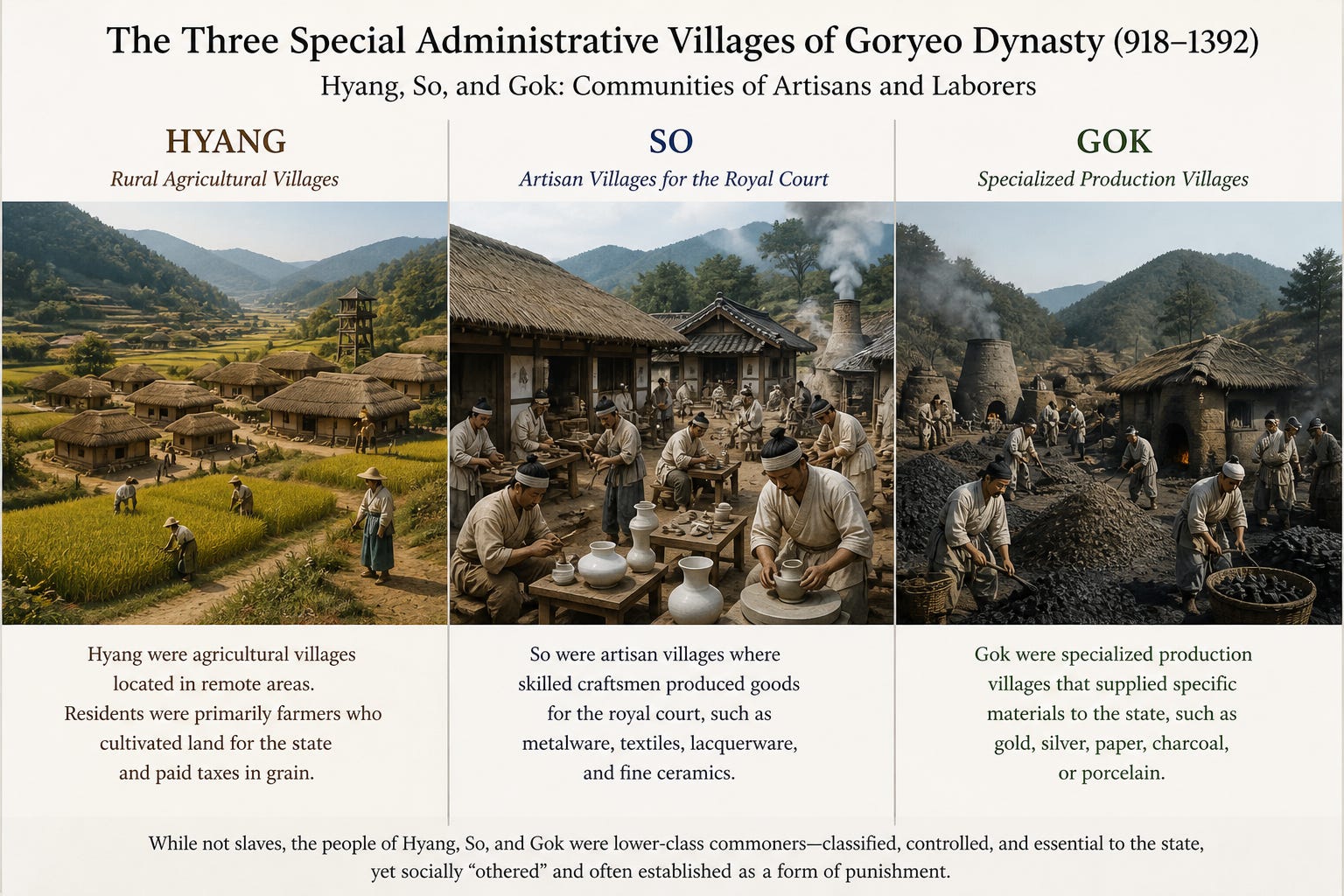
These districts were often established as a form of punishment. If a region rebelled against the government, the status of the entire town could be demoted to a Hyang, So or Gok as a mark of shame.
This is still happening today. The village is sometimes located at a Starbucks, or behind a Zoom camera.
I didn’t fail her test because she didn’t understand what I do.
I failed it because she couldn’t place me.
You don’t get othered because you lack value.
You get othered because your value isn’t immediately recognizable.
And in a world that moves fast…recognizable beats complex.
Life on the Fringe
Many of the people holding society together are difficult to summarize at a dinner table.
We’re useful. But not central. We’re invited to contribute. Not to belong.
We’re the ones who don’t have titles that impress people at dinner.
The ones who have to explain what we do.
The ones who watch the room decide if we count.
You don’t get told you don’t belong.
You just stop being included.

Downgraded By Ignorance
Othering is often administrative before it is emotional.
People sort quickly.
Society sorts quickly.
Algorithms sort quickly.
Recruiters sort quickly.
If people can’t place you, they don’t ask more questions. They downgrade you and move on.
The moment your work requires an explanation, people begin searching for the nearest category they already understand.
Complexity gets reduced into something socially manageable.
Artists become “unemployed.”
Researchers become “professional students.”
Freelancers become “unstable.”
Writers become “people with hobbies.”
If you don’t learn how to translate your complexity, the system will reduce you for you.
It’s not enough to have lived a complex, skill-heavy life. It must be legible.

The Robe That Gets You Out of the Village
In the Joseon Dynasty, the robes of the nobility instantly communicated rank, legitimacy, and social position.
This is where the Résumé Robe comes in. Not the version you send to recruiters.
The one built from everything that doesn’t fit neatly into a job title, your patchwork identity, complexity that only makes sense from a distance.
Structured legitimacy vs lived complexity.
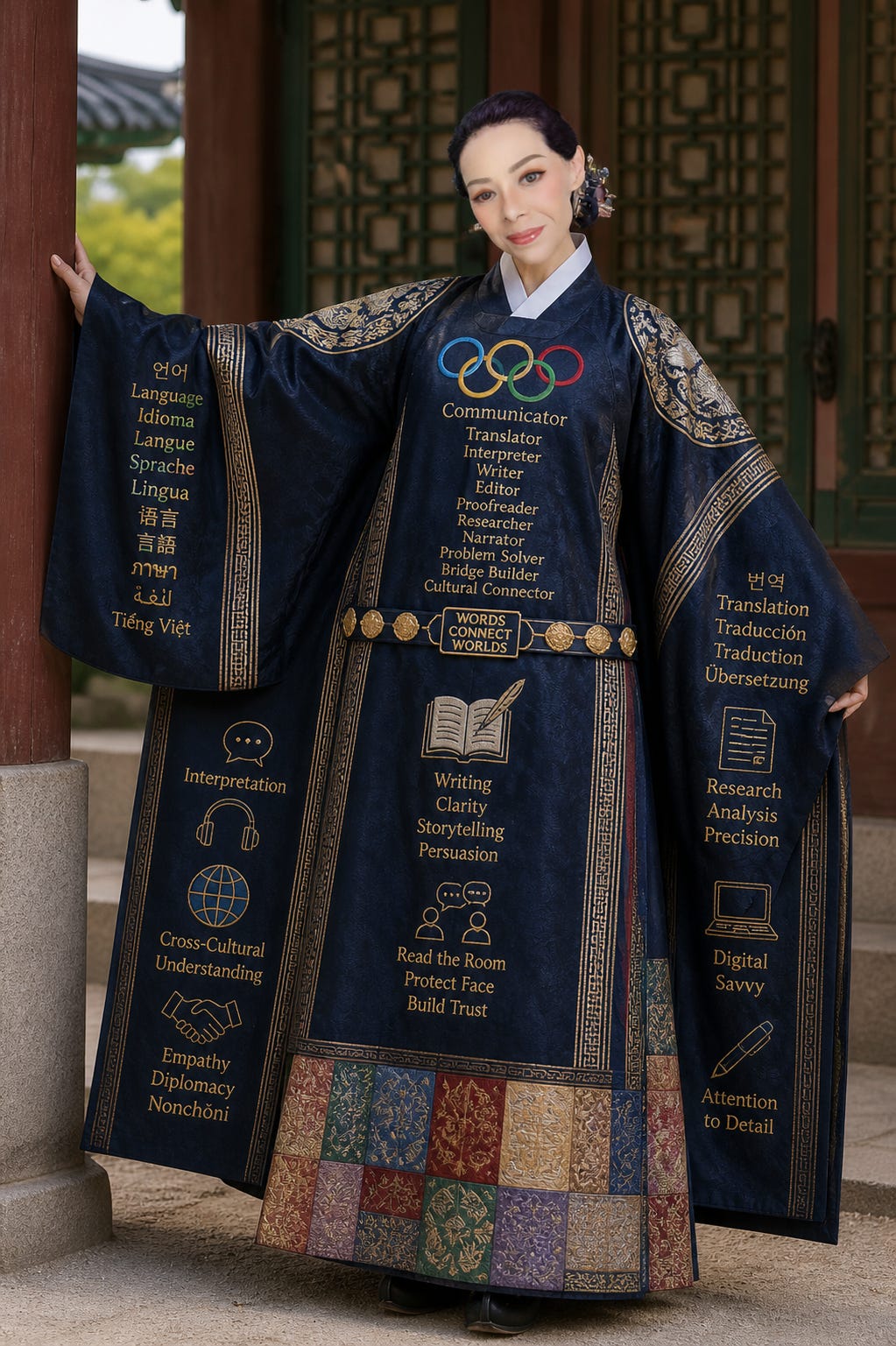
If your value doesn’t look like something the system recognizes on sight, you think you need a new role to be taken seriously. A better title. A cleaner narrative. A more recognizable path.
But that’s not how most lives are built. They’re built like jogakbo1, sewn together with scraps of skills from old jobs, abandoned paths, and previous versions of yourself.
Scraps that only make sense once they’re assembled.
Translating Complexity

You need to stop waiting for someone else to recognize your complexity automatically and learn how to translate your value into a language the system understands.
Because the people who move forward aren’t always the most capable. They’re the ones that are easiest to place.
But complexity is not failure. It’s often the result of surviving multiple identities, industries, languages, or reinventions.
You don’t need better branding. You need to stop interpreting misrecognition as proof of inferiority.
Some lives only become coherent when viewed from far enough away to see the entire patchwork.
Jogakbo (조각보) is the traditional Korean art form where leftover scraps of fabric are stitched together to create a single, beautiful wrapping cloth.
Needed this today 🤍
Thank you for putting this into words for so many of us. With age I finally stopped being othered. I am very happy you were able to see the light much earlier. I hope the same for many others.